Silent Strangers

Silent Strangers 

Soy Capitán, Berlin, 2025

People travel paths, pulling their suitcases from A to B. Some journeys lead to brief moments of relaxation, others leave behind an invisible yet heavy baggage. In this way, stories, traditions, and goods circulate around the globe — until, eventually, someone cracks open their peanuts on a Berlin park bench or takes a satisfied bite of their €15 avocado toast.

In her solo exhibition at Soy Capitán, Yeşim Akdeniz interweaves economic movements with stories of displacement and identity.

By Lara Brörken, 2025, Gallerytalk.net

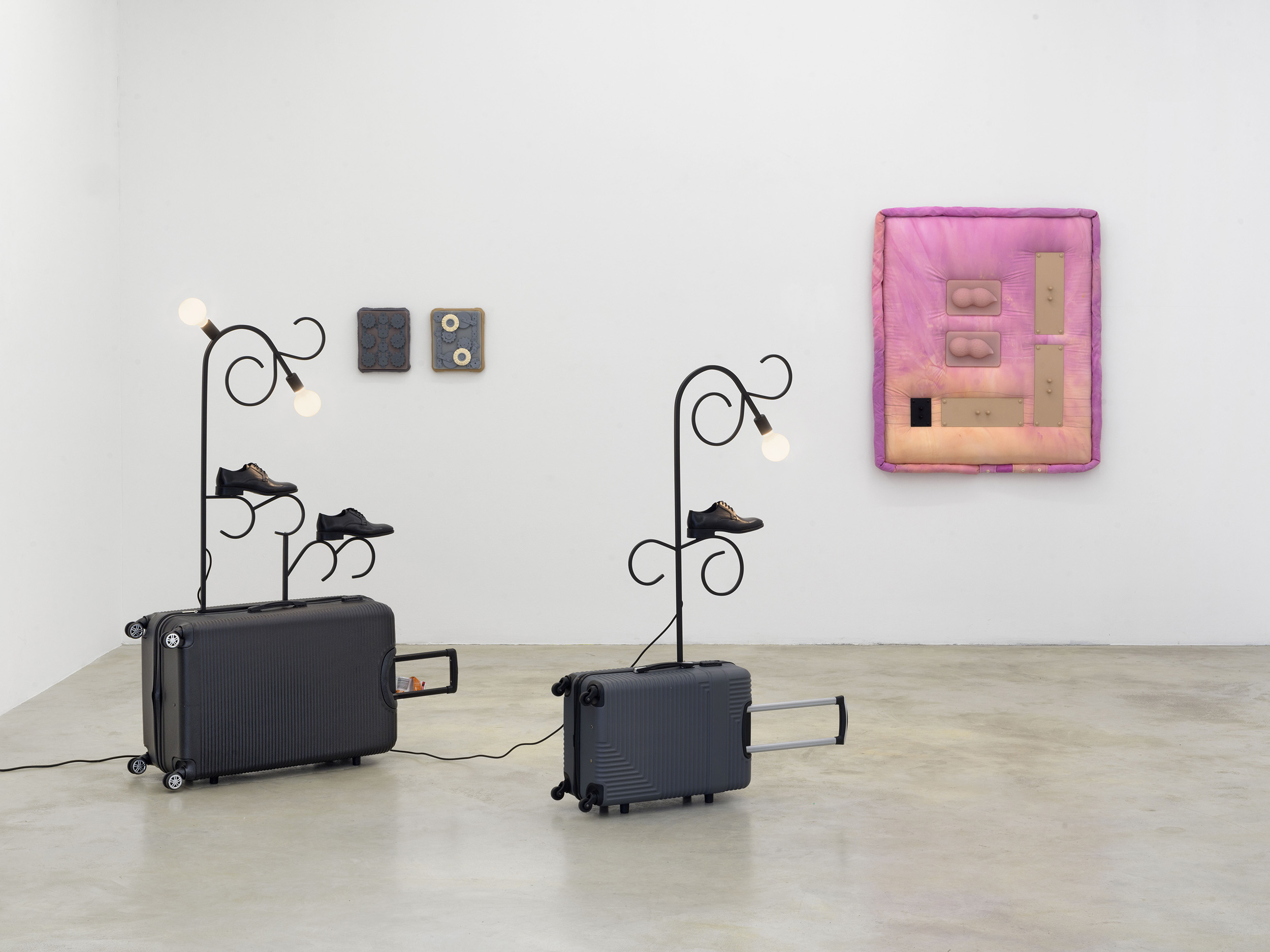
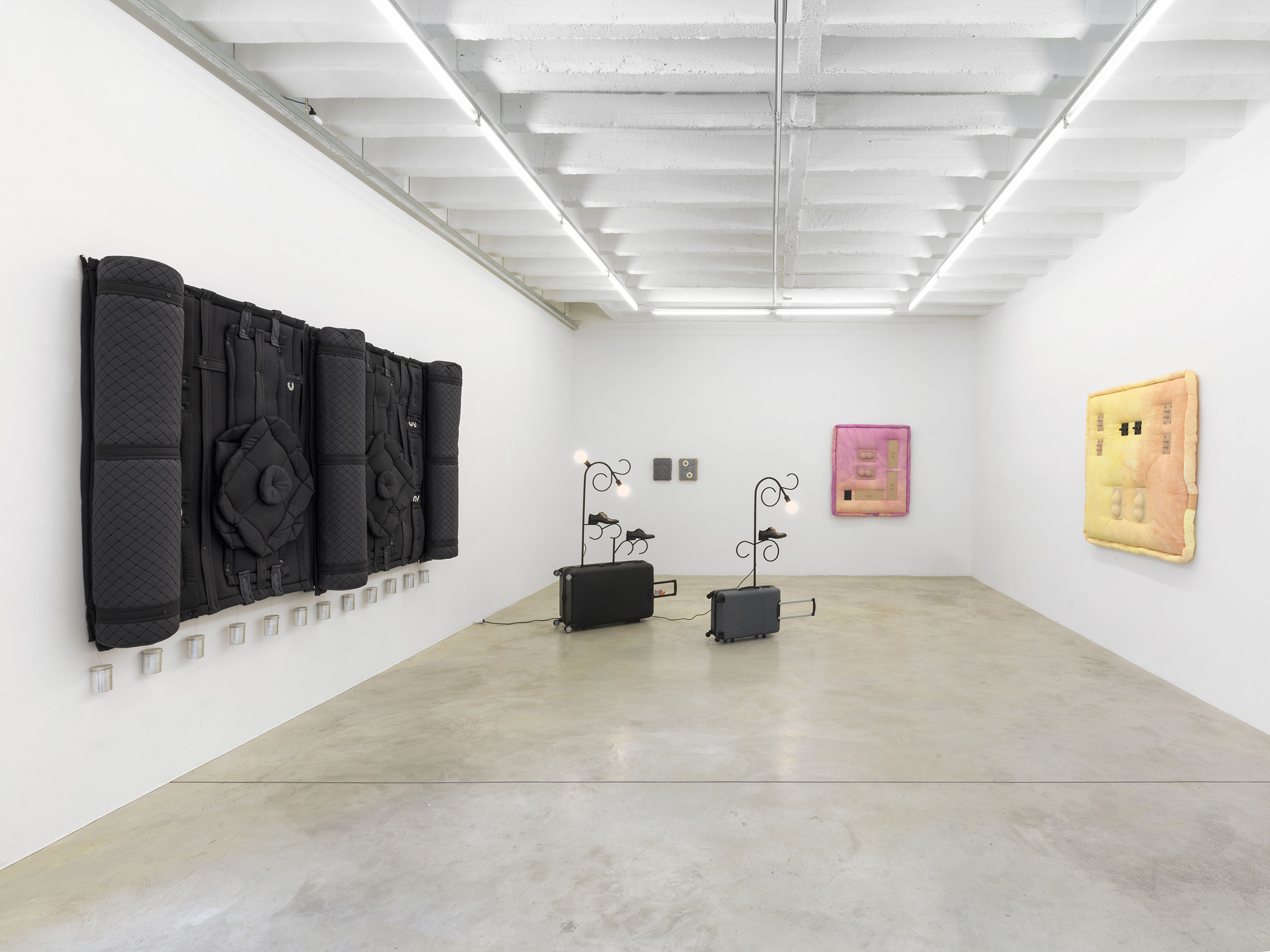
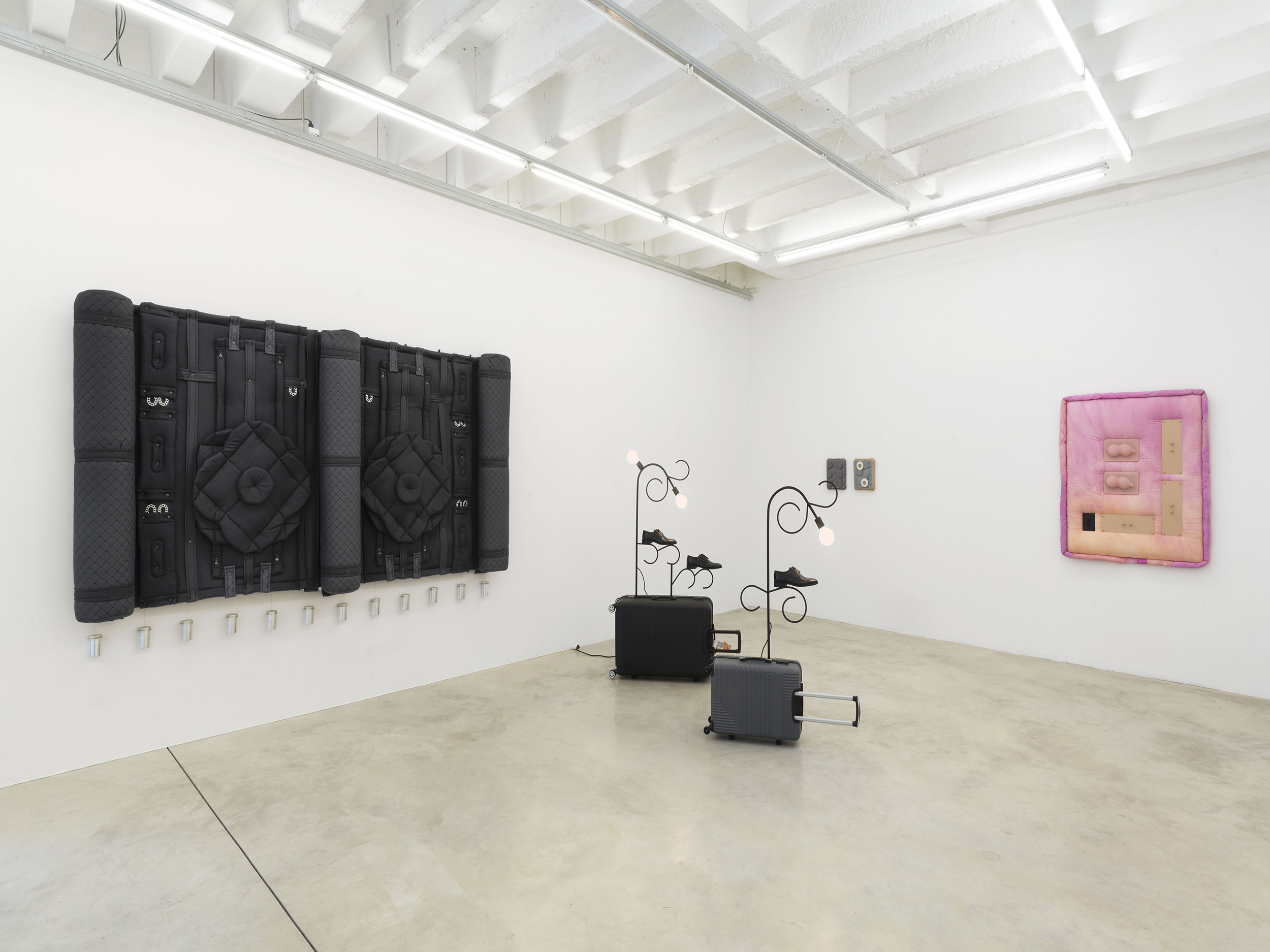
Two hard-shell suitcases lie on the rocky ground, tangled metal rods protruding from them. Black shoes stand upon the rods, and three lightbulbs hang from them like fruit on a tree. Surrounded by padded objects on the walls, the scene in the gallery space evokes both a holiday mood and an urban landscape. Images flicker before the mind’s eye — scenes in the cozy glow of an ornate streetlamp, the sound of hurried footsteps on asphalt, the smell of kerosene, an unfamiliar mattress, and the bittersweet feeling of farewell.

Yeşim Akdeniz’s works seem to whisper it silently into the room: her solo exhibition Silent Strangers at Soy Capitán revolves around the theme of movement.

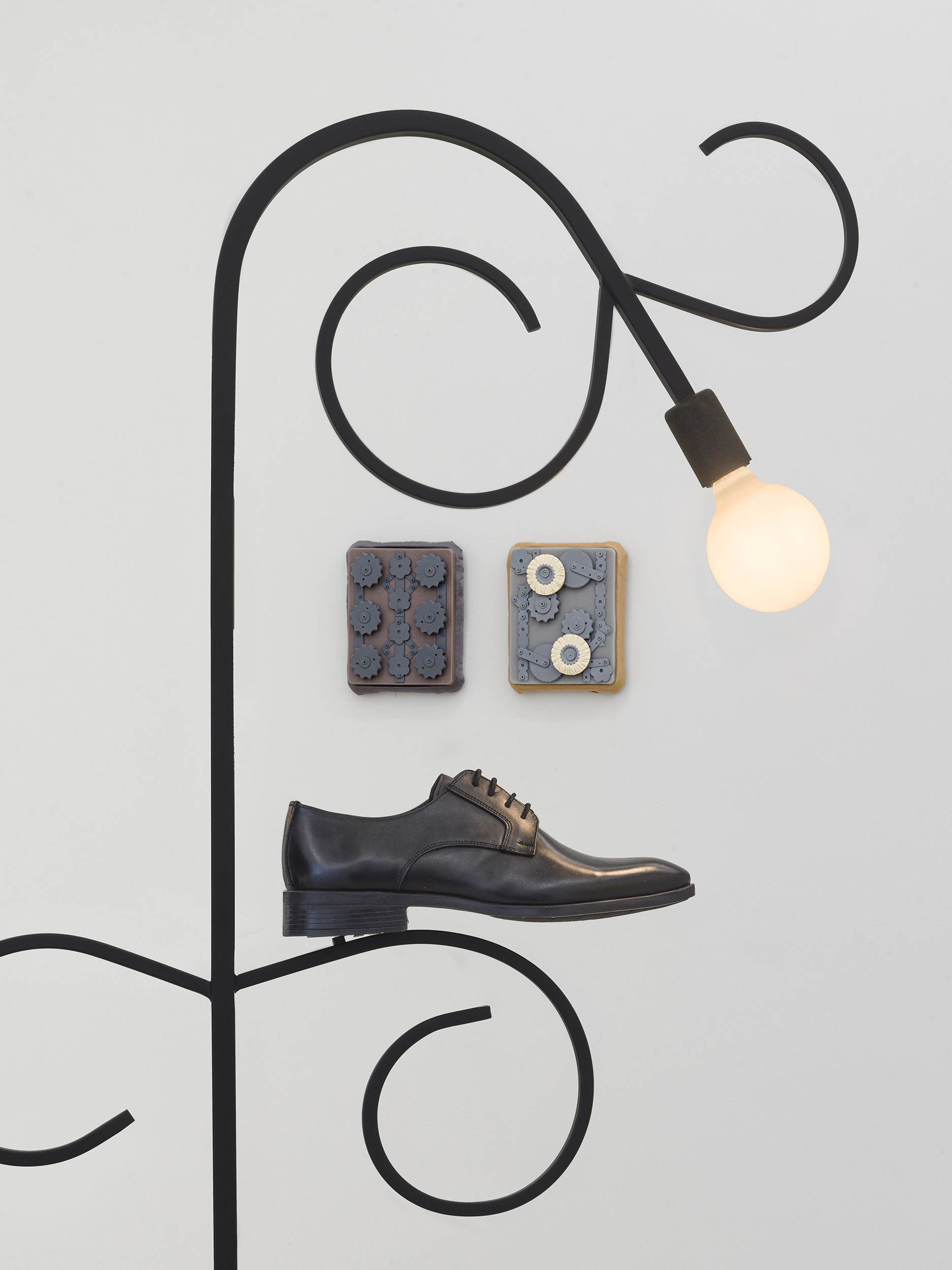
Again and again, the questions arise: Where from, and where to? These two suitcases haven’t been still for long; the barcode from their last flight still hangs from the handles. Where they came from is unclear, but one thing is certain — they have arrived here. Here they stand now, transformed into the feet of a lamp hand-forged in Istanbul. In her series New Faces in Town, Akdeniz combines craftsmanship with the notion of travel — the shifting of one’s place of living — for whatever reason that might be. Whether it’s a move or an escape, these two suitcases can quite literally bring light into the dark. They become symbols of hope — of the possibility to take root and bear fruit in new places.

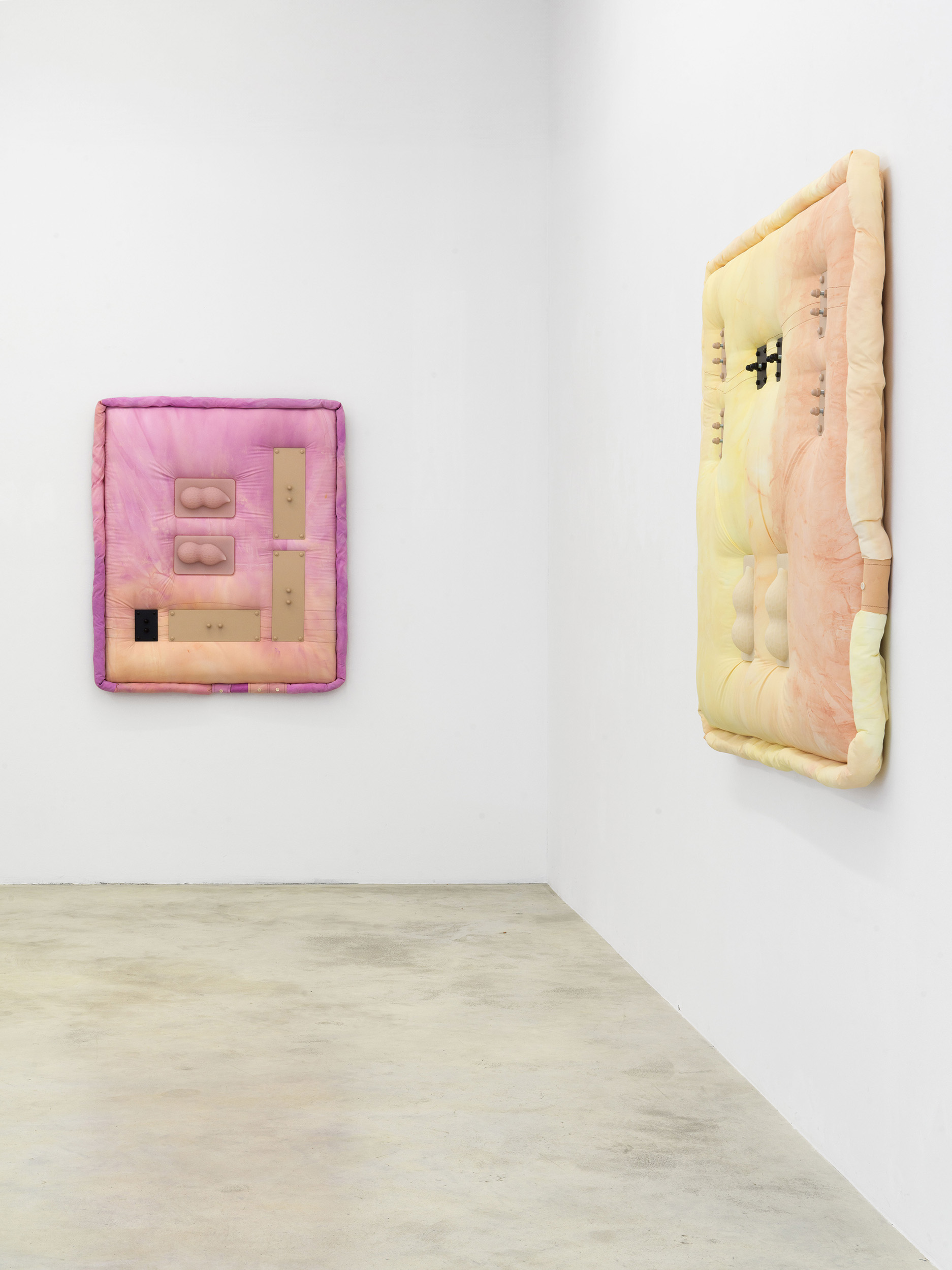
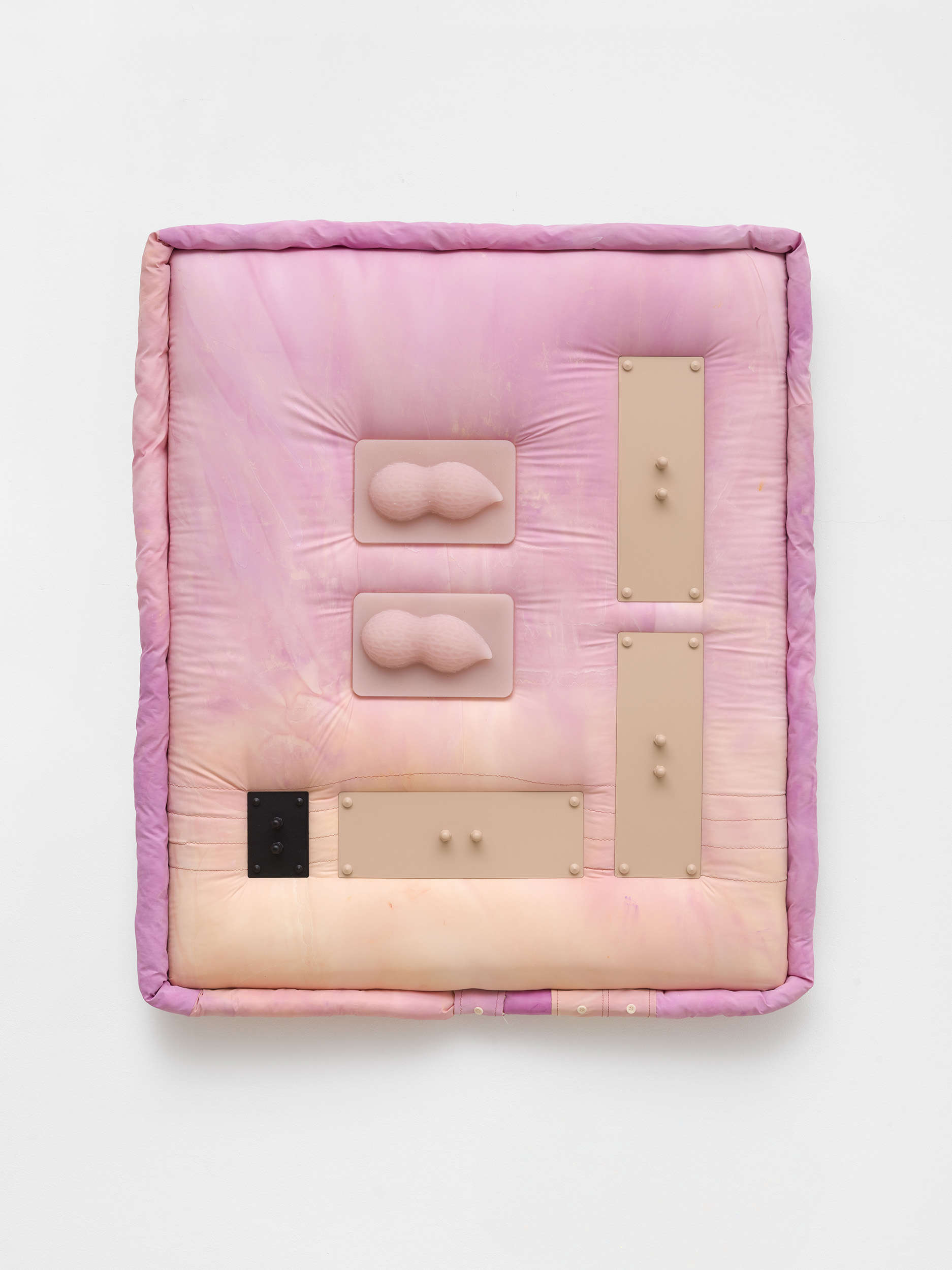
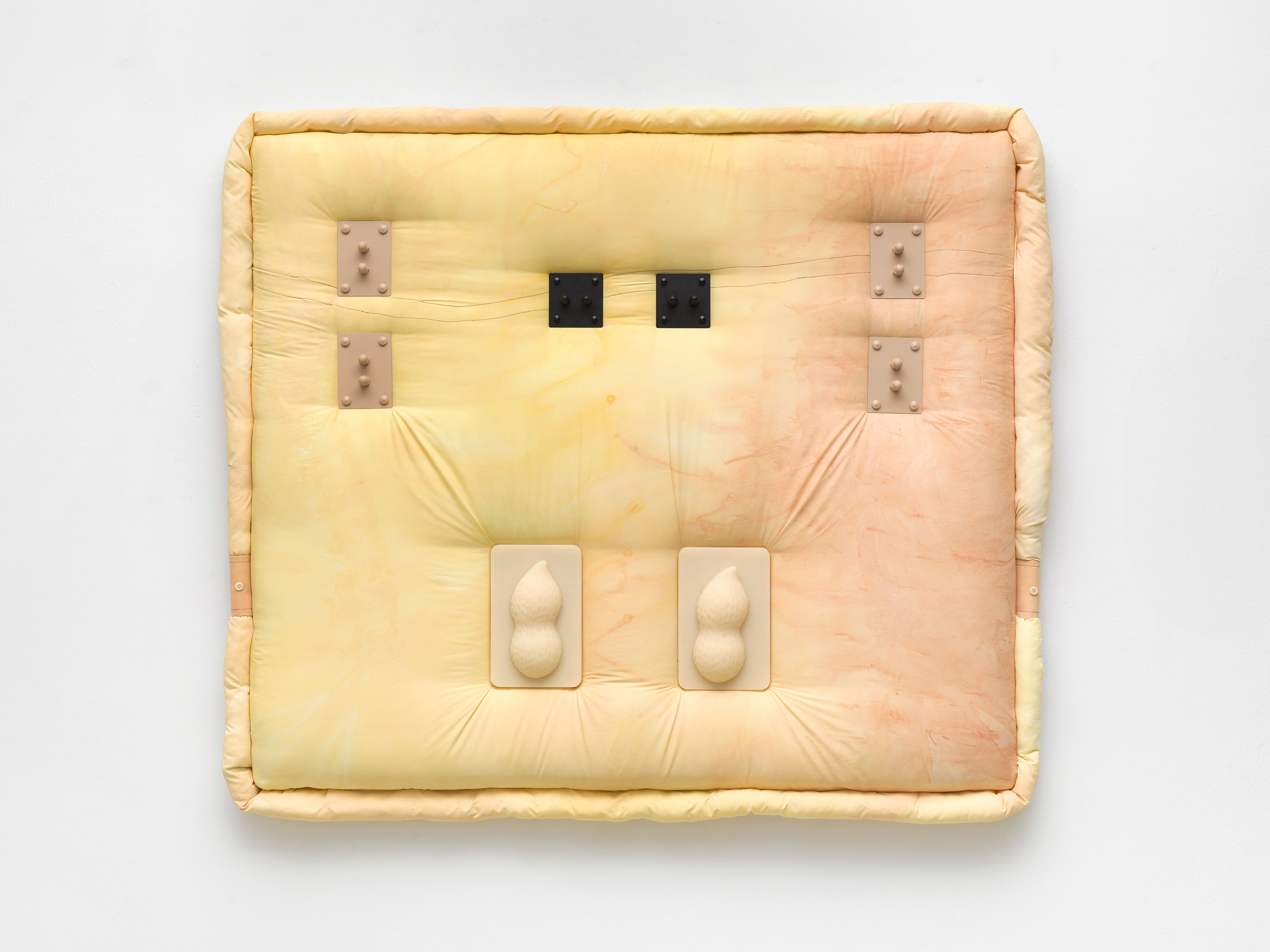
Speaking of roots and fruits: underground grows the peanut. She is one of Akdeniz’s protagonists, cast in silicone and seated on her padded works #8 and #9 from the series TBA. The peanut is, quite literally, a fruit that grows on roots — a symbol of successful integration? It’s a beautiful image. The peanut has also economically integrated; with Akdeniz, it becomes a symbol of global trade. Originally native to the Andes, its cultivation has spread widely. Today, China and India are considered the largest producers of peanuts. And by now, it probably appears on every European Christmas plate.

Next to the reclining silicone peanuts, metal plates are screwed into the padding, creating a visual and tactile tension between hard and soft. The screw heads protrude, and together with the silicone peanuts, they evoke nipples — a bodily aspect mixing into the mechanical. This corporeal quality becomes even stronger in the third textile wall piece, TBA #7, where three silicone avocados are stacked atop one another on an orange-pink gradient, each accompanied by a black plate with a round, protruding screw. The curves of the nutrient-rich fruit recall a breast implant — with its areola seemingly outsourced into the form of the screw — a deconstructed breast? In any case, the earth’s nurturing breast would be found closer to where the avocado grows. And of course, the avocado is indeed nourishing — yet its journey to us harms the planet more than its superfood powers can make up for. Its import fuels the deconstruction of Mother Earth herself.

Akdeniz interlocks the human and the machine with sharp wit, confronting visitors with visual riddles in Brown and White Cipher that beg to be deciphered. On a silicone surface, she combines metallic objects such as saw blades, gears, and intricately crafted fittings. The hard metallic elements seem always on the verge of cutting into the vulnerability of the skin-like base. For now, the human and the industrial coexist harmoniously; the gears even appear to bloom, and both within and beyond the work, injury remains a constant possibility. The human becomes the foundation of a running mechanism — their actions the teeth of the gear, their body the first thing at risk of collapse.

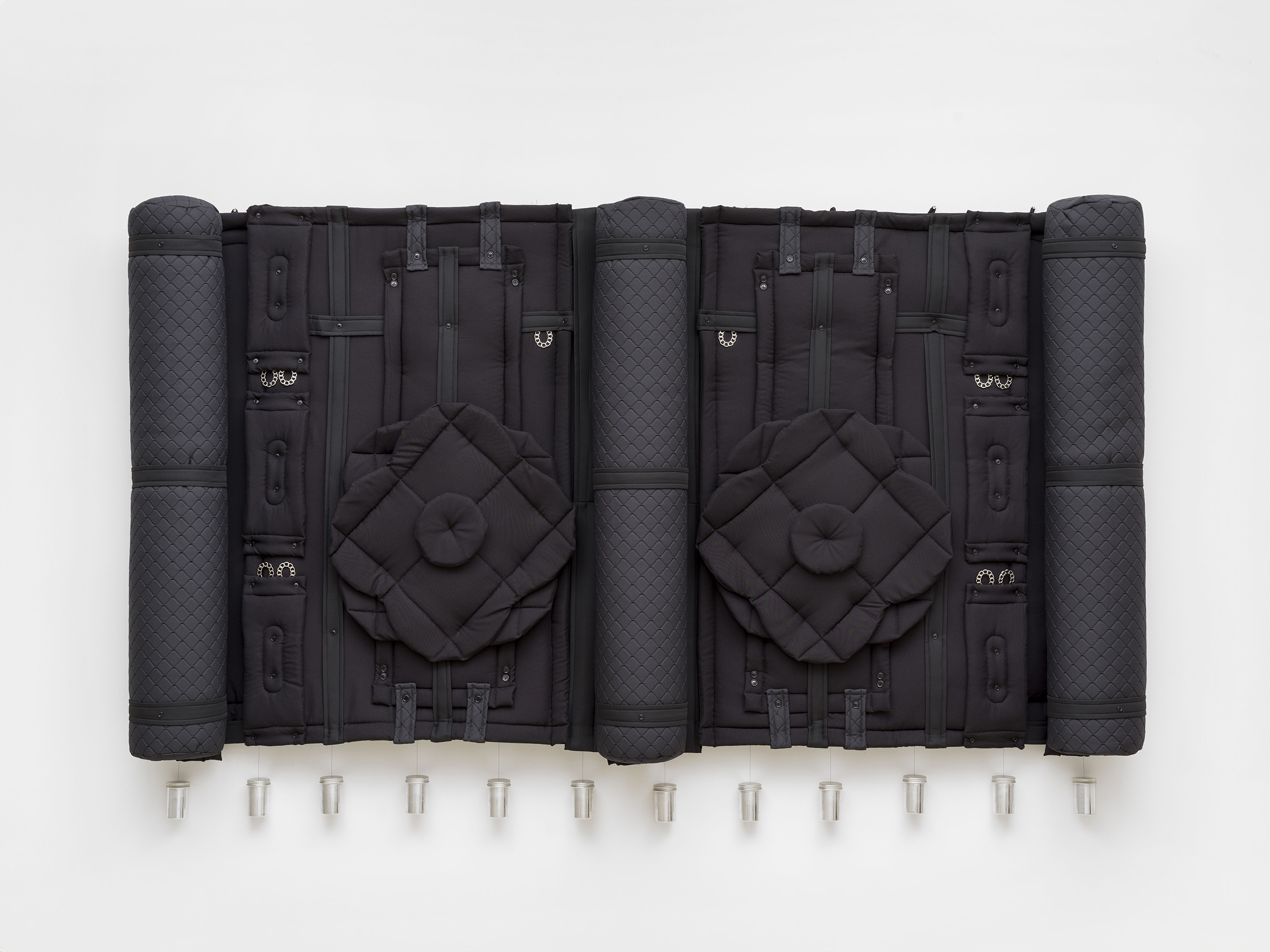
Potential injury, the fragile construct that holds things together, and the notion of movement — Akdeniz elevates these themes into various contexts, yet they always return to the individual. From the small screw to industry, from there to the nipple that feeds the next generation. With her Self-Portrait as an Orientalist Carpet, Akdeniz crowns this chain of associations. The large-scale textile wall piece, composed of three large rolls on an elaborately quilted base, evokes a roll-up tool bag, a BDSM playground, and an orthopedic neck pillow all at once. Hanging from it are twelve silver-glinting spice shakers, echoing the shine of the sewn-in eyelets and buckles across the surface. Associations that at first seem unrelated — production, craftsmanship, the body, health, and pleasure — fit together beautifully here.

Where is the journey headed? Yeşim Akdeniz poses this question in the form of objects — and, if she answers it at all, it lies somewhere between suitcase, cushion, and gear: “it will always go on.”

Visitors to her exhibition Silent Strangers at Soy Capitán are invited to become aware of their own paths, their roles within the construct, and their privileges. Which screws can we adjust? How can we protect as much skin as possible from being cut?

With big questions in mind and the rattling sound of a rolling suitcase in their ears, they step back out into the world. The streetlights switch on, and it feels almost cozy amid the lively bustle of Friedrichstraße.
Installation view, SOY CAPITAN, 2025
Installation view, SOY CAPITAN, 2025, Self portrait as an Orientalist carpet 22, 180x300cm textile, upholstery, button, buckle, velcro, stitching, pepper shakers
Installation view, SOY CAPITAN, 2025, TBA #9, 130x110 cm textile, silicone, button, paint, upholstery, wood
Installation view, SOY CAPITAN, 2025, TBA #8, 130x150cm textile, silicone, button, paint, upholstery, wood

Silent Strangers 

Soy Capitán, Berlin, 2025

People travel paths, pulling their suitcases from A to B. Some journeys lead to brief moments of relaxation, others leave behind an invisible yet heavy baggage. In this way, stories, traditions, and goods circulate around the globe — until, eventually, someone cracks open their peanuts on a Berlin park bench or takes a satisfied bite of their €15 avocado toast.

In her solo exhibition at Soy Capitán, Yeşim Akdeniz interweaves economic movements with stories of displacement and identity.

By Lara Brörken, 2025, Gallerytalk.net

Two hard-shell suitcases lie on the rocky ground, tangled metal rods protruding from them. Black shoes stand upon the rods, and three lightbulbs hang from them like fruit on a tree. Surrounded by padded objects on the walls, the scene in the gallery space evokes both a holiday mood and an urban landscape. Images flicker before the mind’s eye — scenes in the cozy glow of an ornate streetlamp, the sound of hurried footsteps on asphalt, the smell of kerosene, an unfamiliar mattress, and the bittersweet feeling of farewell.

Yeşim Akdeniz’s works seem to whisper it silently into the room: her solo exhibition Silent Strangers at Soy Capitán revolves around the theme of movement.

Again and again, the questions arise: Where from, and where to? These two suitcases haven’t been still for long; the barcode from their last flight still hangs from the handles. Where they came from is unclear, but one thing is certain — they have arrived here. Here they stand now, transformed into the feet of a lamp hand-forged in Istanbul. In her series New Faces in Town, Akdeniz combines craftsmanship with the notion of travel — the shifting of one’s place of living — for whatever reason that might be. Whether it’s a move or an escape, these two suitcases can quite literally bring light into the dark. They become symbols of hope — of the possibility to take root and bear fruit in new places.

Speaking of roots and fruits: underground grows the peanut. She is one of Akdeniz’s protagonists, cast in silicone and seated on her padded works #8 and #9 from the series TBA. The peanut is, quite literally, a fruit that grows on roots — a symbol of successful integration? It’s a beautiful image. The peanut has also economically integrated; with Akdeniz, it becomes a symbol of global trade. Originally native to the Andes, its cultivation has spread widely. Today, China and India are considered the largest producers of peanuts. And by now, it probably appears on every European Christmas plate.

Next to the reclining silicone peanuts, metal plates are screwed into the padding, creating a visual and tactile tension between hard and soft. The screw heads protrude, and together with the silicone peanuts, they evoke nipples — a bodily aspect mixing into the mechanical. This corporeal quality becomes even stronger in the third textile wall piece, TBA #7, where three silicone avocados are stacked atop one another on an orange-pink gradient, each accompanied by a black plate with a round, protruding screw. The curves of the nutrient-rich fruit recall a breast implant — with its areola seemingly outsourced into the form of the screw — a deconstructed breast? In any case, the earth’s nurturing breast would be found closer to where the avocado grows. And of course, the avocado is indeed nourishing — yet its journey to us harms the planet more than its superfood powers can make up for. Its import fuels the deconstruction of Mother Earth herself.

Akdeniz interlocks the human and the machine with sharp wit, confronting visitors with visual riddles in Brown and White Cipher that beg to be deciphered. On a silicone surface, she combines metallic objects such as saw blades, gears, and intricately crafted fittings. The hard metallic elements seem always on the verge of cutting into the vulnerability of the skin-like base. For now, the human and the industrial coexist harmoniously; the gears even appear to bloom, and both within and beyond the work, injury remains a constant possibility. The human becomes the foundation of a running mechanism — their actions the teeth of the gear, their body the first thing at risk of collapse.

Potential injury, the fragile construct that holds things together, and the notion of movement — Akdeniz elevates these themes into various contexts, yet they always return to the individual. From the small screw to industry, from there to the nipple that feeds the next generation. With her Self-Portrait as an Orientalist Carpet, Akdeniz crowns this chain of associations. The large-scale textile wall piece, composed of three large rolls on an elaborately quilted base, evokes a roll-up tool bag, a BDSM playground, and an orthopedic neck pillow all at once. Hanging from it are twelve silver-glinting spice shakers, echoing the shine of the sewn-in eyelets and buckles across the surface. Associations that at first seem unrelated — production, craftsmanship, the body, health, and pleasure — fit together beautifully here.

Where is the journey headed? Yeşim Akdeniz poses this question in the form of objects — and, if she answers it at all, it lies somewhere between suitcase, cushion, and gear: “it will always go on.”

Visitors to her exhibition Silent Strangers at Soy Capitán are invited to become aware of their own paths, their roles within the construct, and their privileges. Which screws can we adjust? How can we protect as much skin as possible from being cut?

With big questions in mind and the rattling sound of a rolling suitcase in their ears, they step back out into the world. The streetlights switch on, and it feels almost cozy amid the lively bustle of Friedrichstraße.