The Hard Edge of the Labour of Time
The Hard Edge of the Labour of Time
PAKT Foundation, Amsterdam, 2025
Andrea Knezović & Yeşim Akdeniz
Curated by Àngels Miralda
I can never remember my passport number - no matter how many times in a row I need to write it down. Reaching for my backpack, zzzzzip* opendoen. There it is, flip page, find number, type it in.
When people ask me why I live in the Netherlands I always tell them it’s because I love Dutch bureaucracy. Lips turn up in a sly smile as I fill out paper documents from my home country. Done, stamp, put it in the envelope, ouch!
Finger to mouth, salty brine. Papercut straight across the thumb. White paper, black text, red stain. Cutting into the imprints of my identity - that pink identity in blue ink pressed against the beige paper of police files stored away in another continent. Straight across, cutting through who I really am.
Photograph. Eyes closed. Try again.
This exhibition is about time, the impossibility of rest in an age in which tasks pile up endlessly. It’s about maintenance - time means you need to attend to things on a monthly/weekly/daily basis. How is this doubled, tripled, when you have responsibilities towards other living beings or when you’re waiting for a visa that is always imminently expired, for a rent contract that’s always about to end. Where will we be in a years’ time, two? Security is about eliminating temporalities, finding permanence in a world based on obsoletion and subscription models that thrive on insecurity.
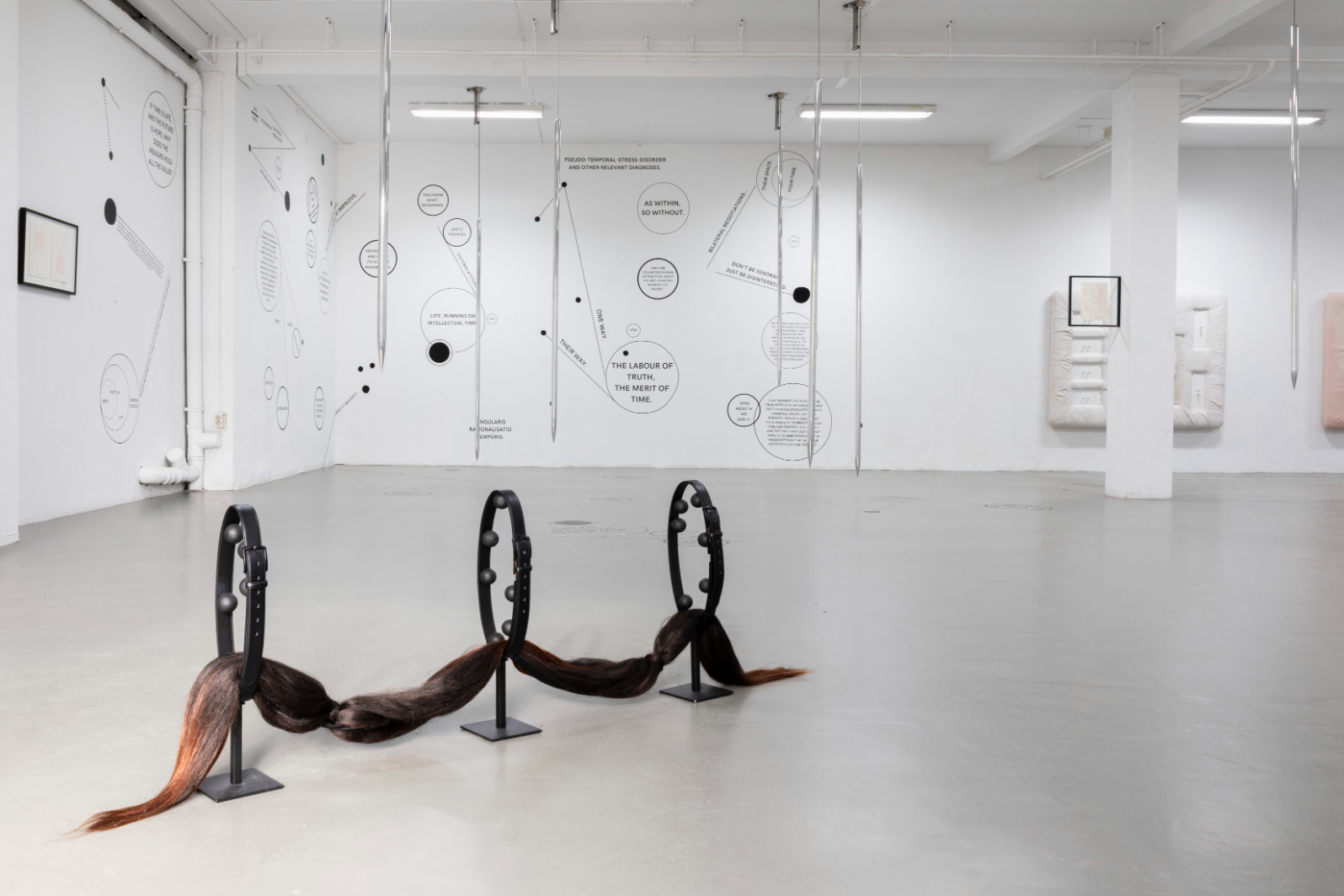
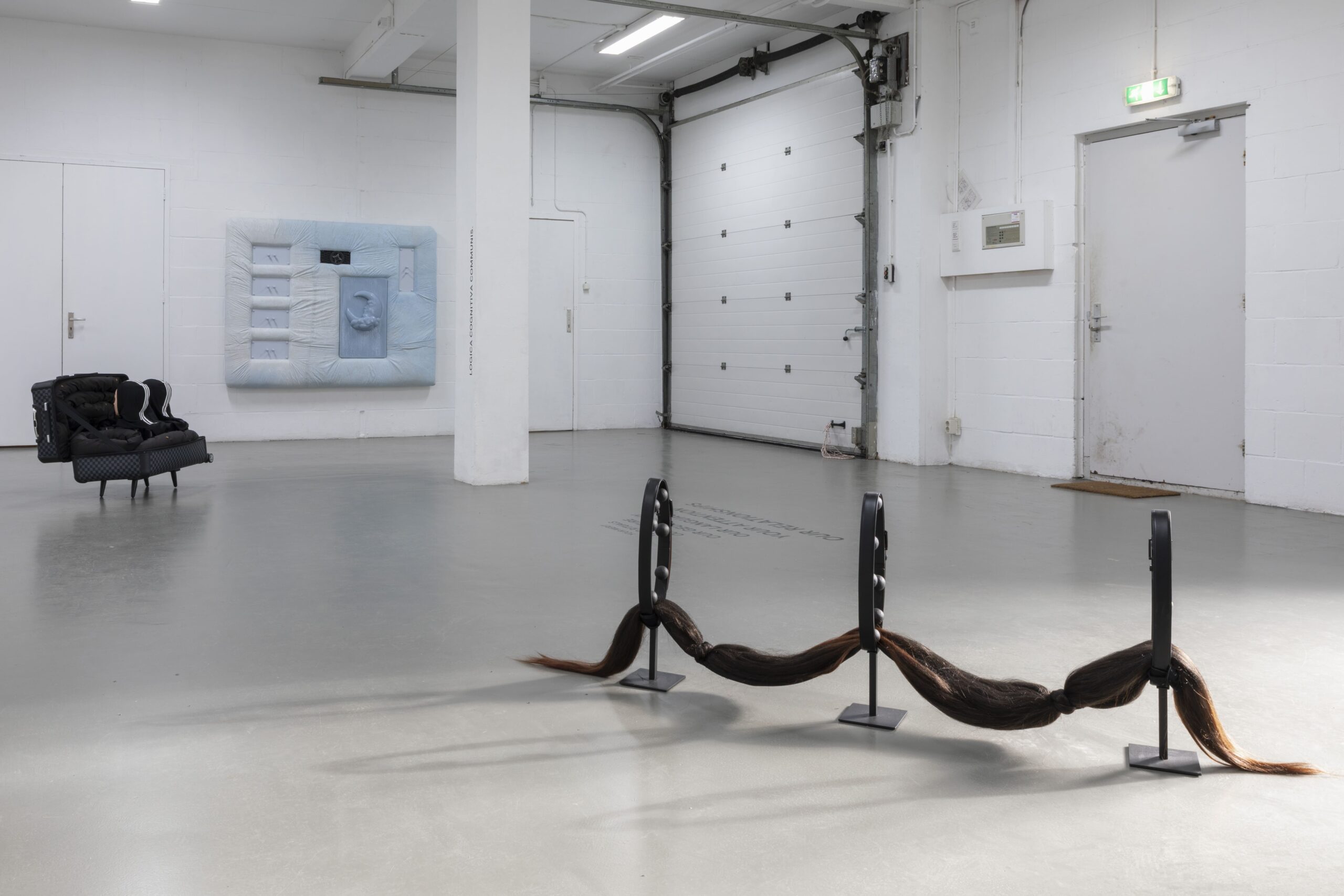
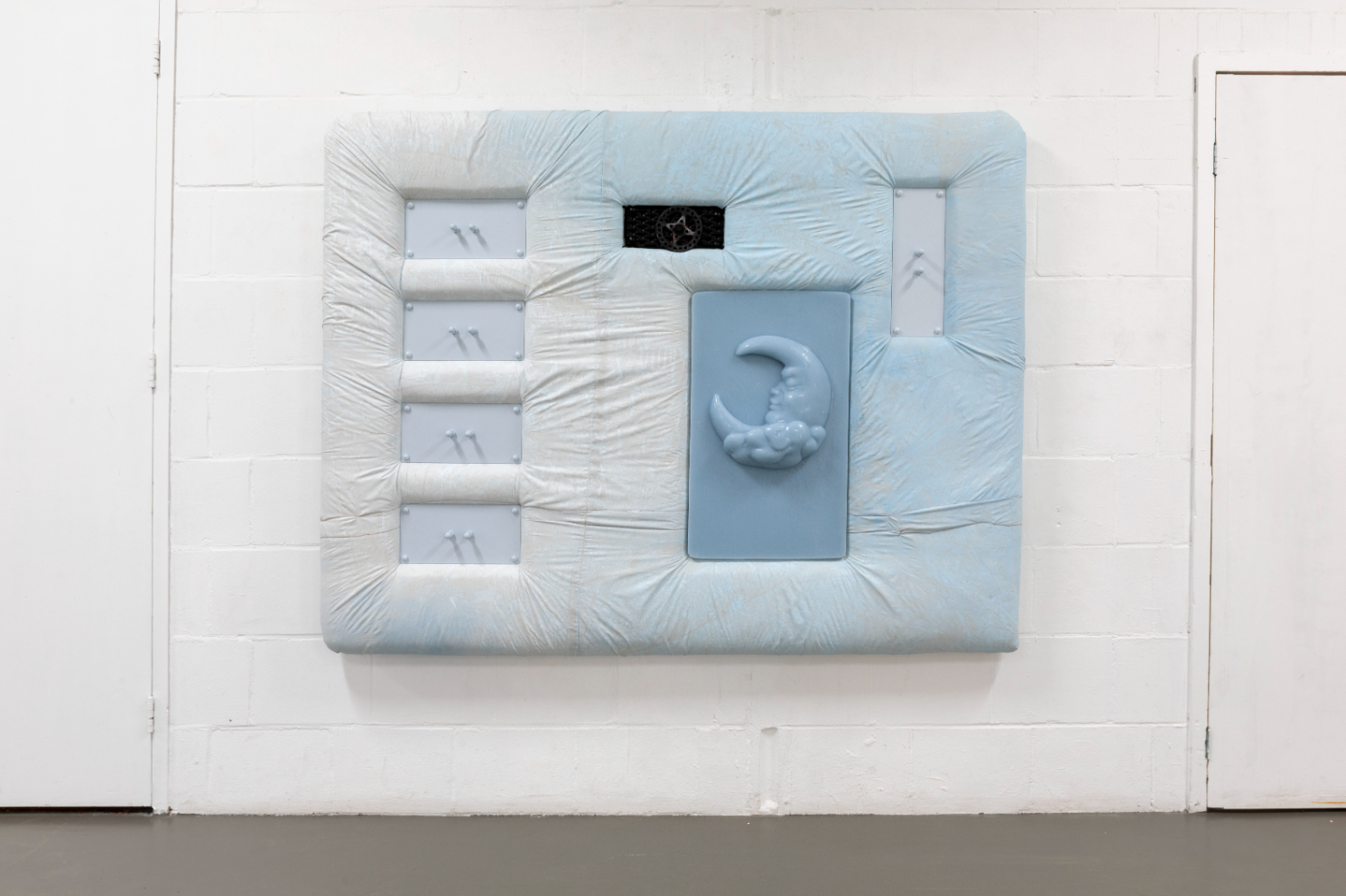
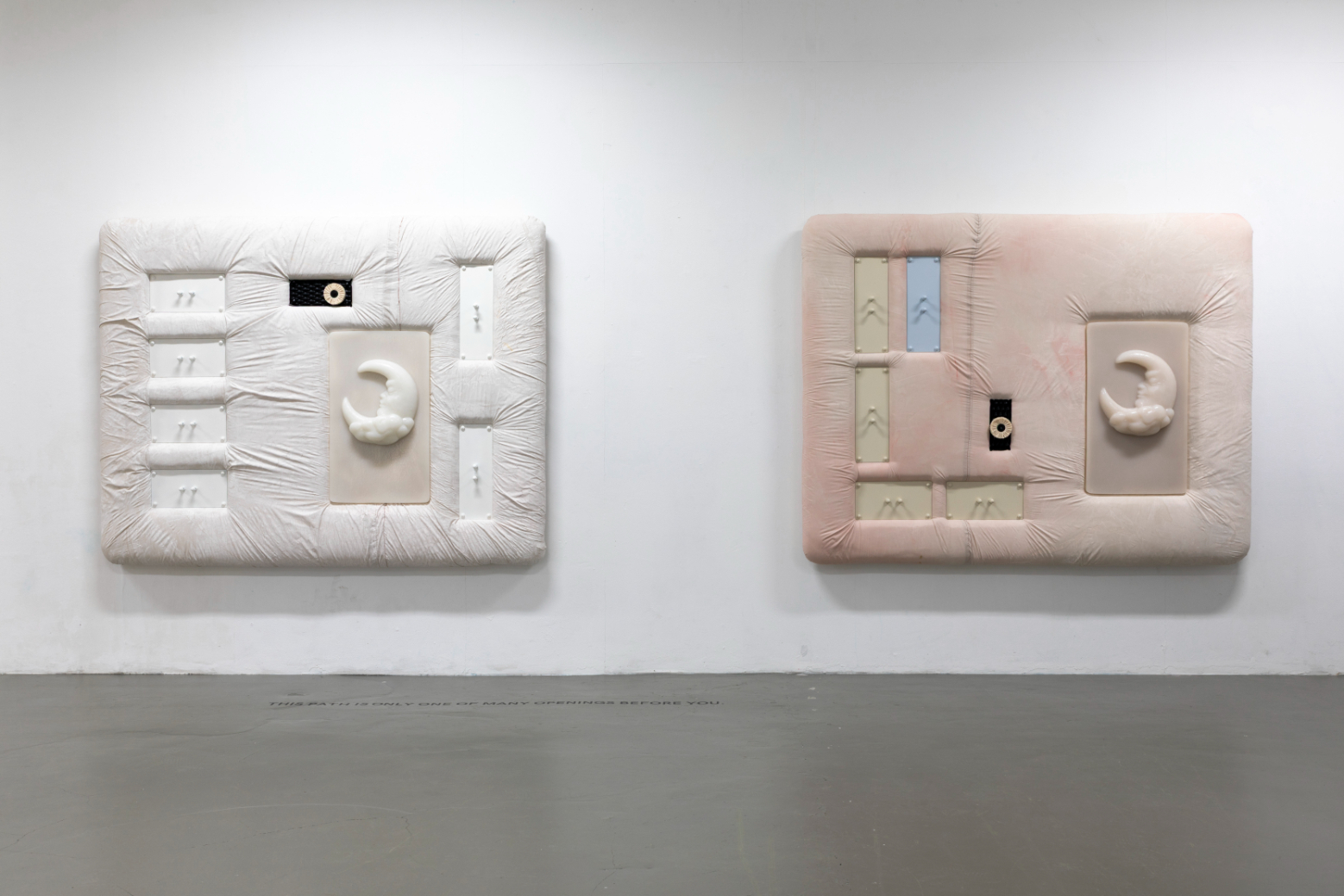
It’s always about stepping on a fine line — a hopscotch of possibilities. In her newly commissioned kinetic installation, composed of seven large-scale sculptural elements functioning as chronometers, Andrea Knezović stages a symbolic play of temporal realities unfolding across multiple moments in time. The work moves through different modes and traces of temporality and their chronopolitics — from consensual (or “true”) time to imagined, errant, and recovered time; from the deeply personal to the collective. Surrounding this slow machinery of time, her signature spatial diagrams sharpen the installation’s inquiry into how temporal experience conditions our relation to self, community, space, and contemporary politics. These diagrams act as satirical reflections on interpersonal neurosis, emotional forms of labour, and the affective economies of cognitive capitalism, exposing its wider socio-political frameworks. A series of drawing scores accompany the installation, using language and its performative tension to articulate shifting perceptions of time, space, measurement, and the emotional nonlinearity of temporal experience.
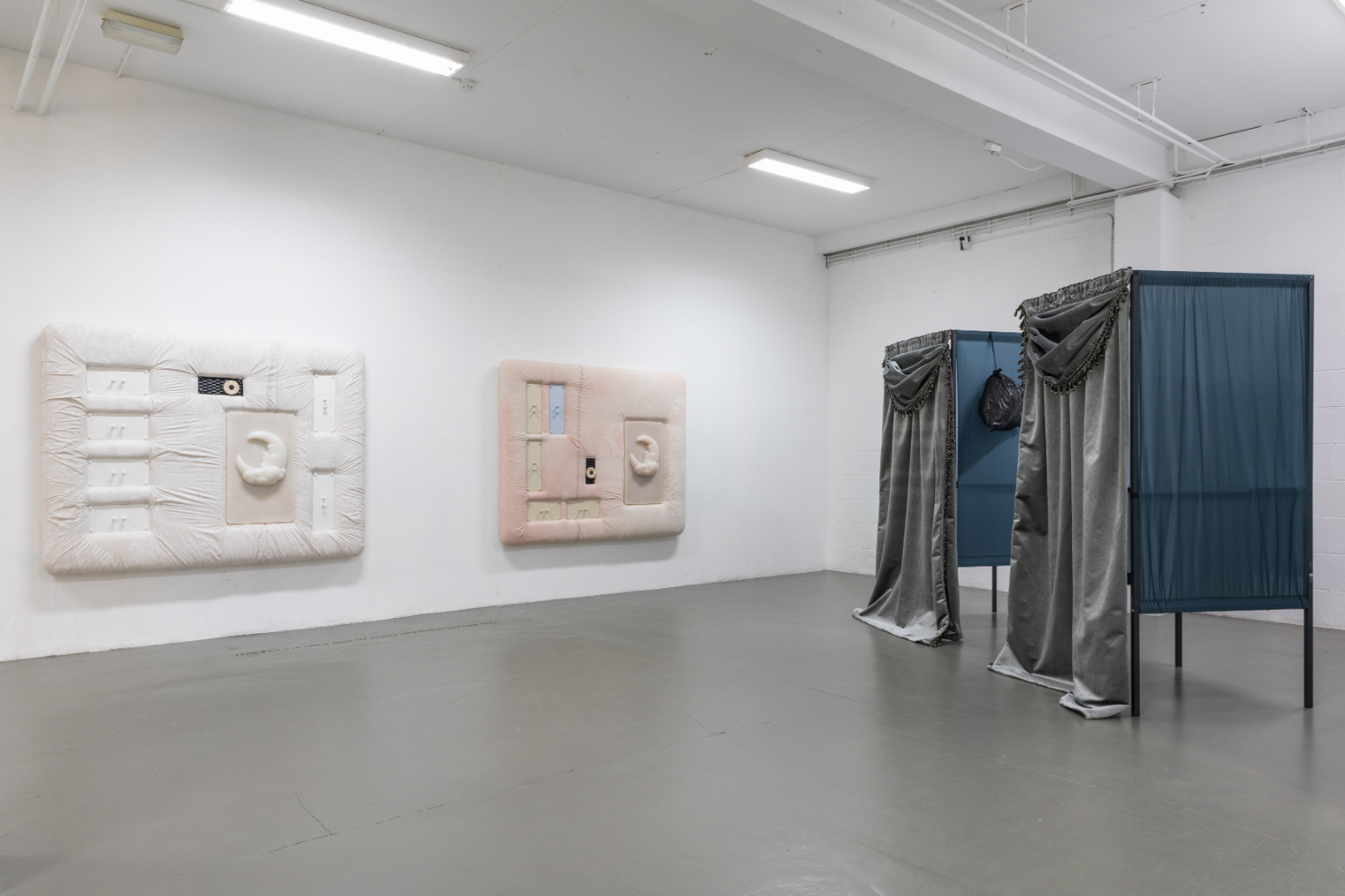
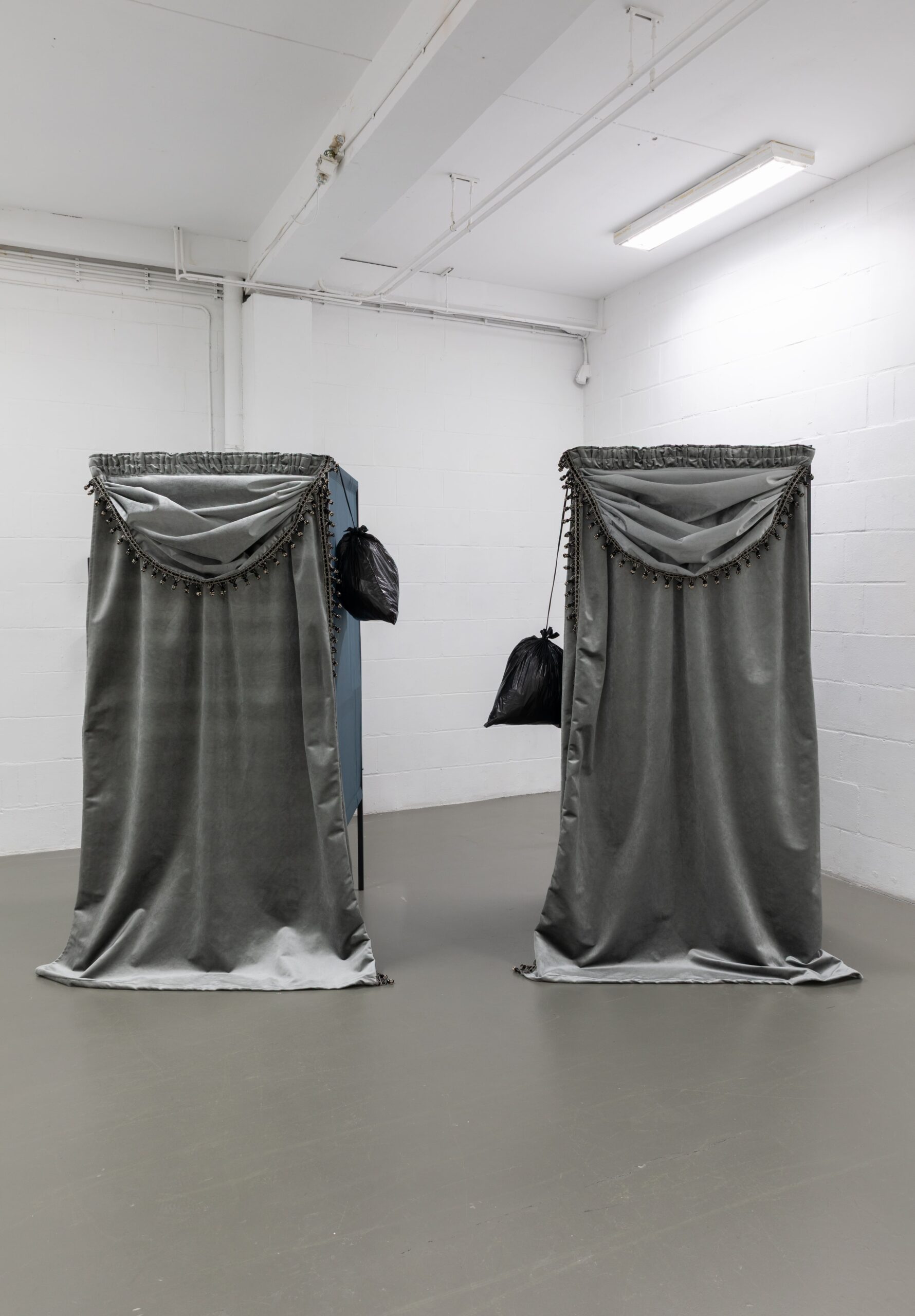
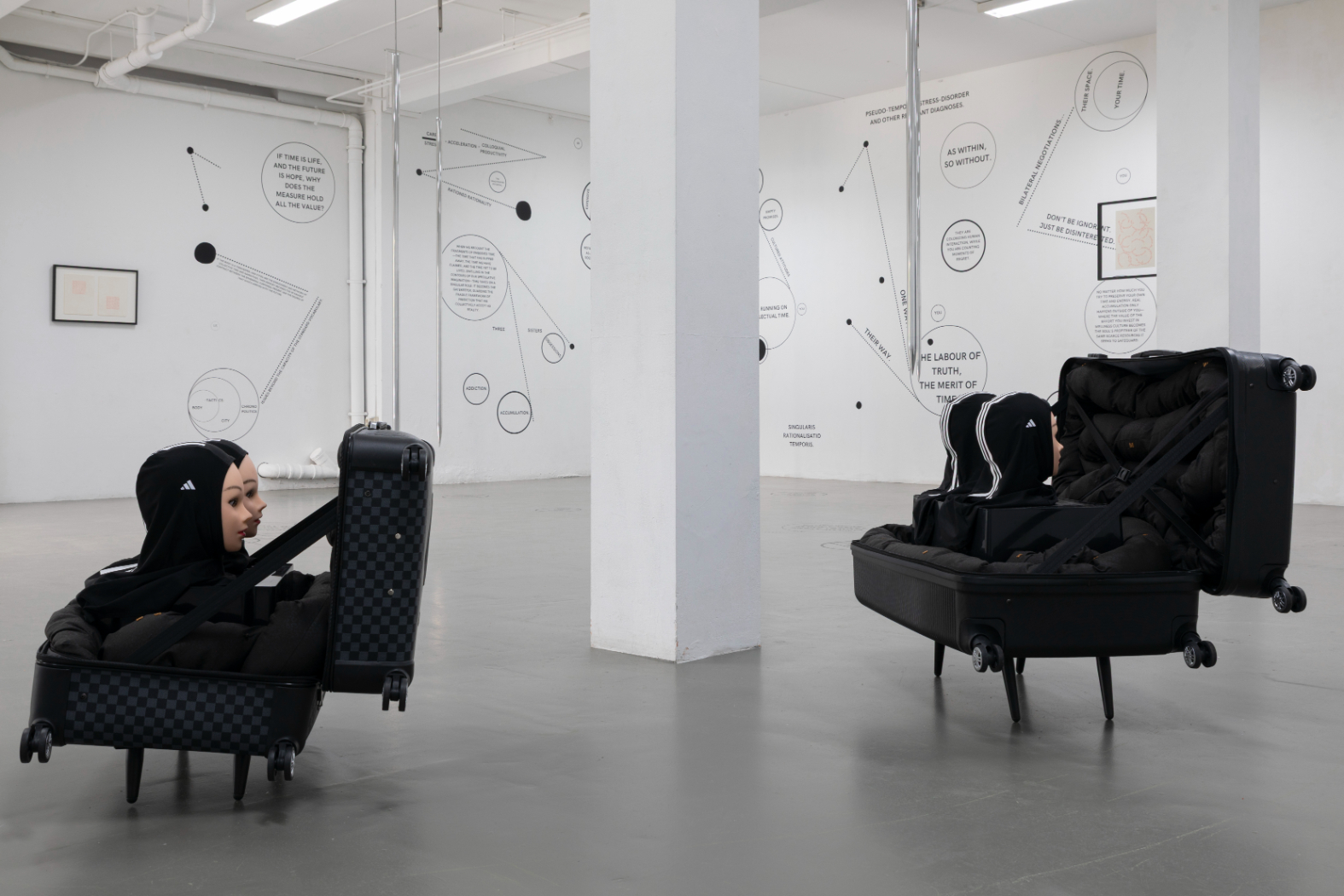
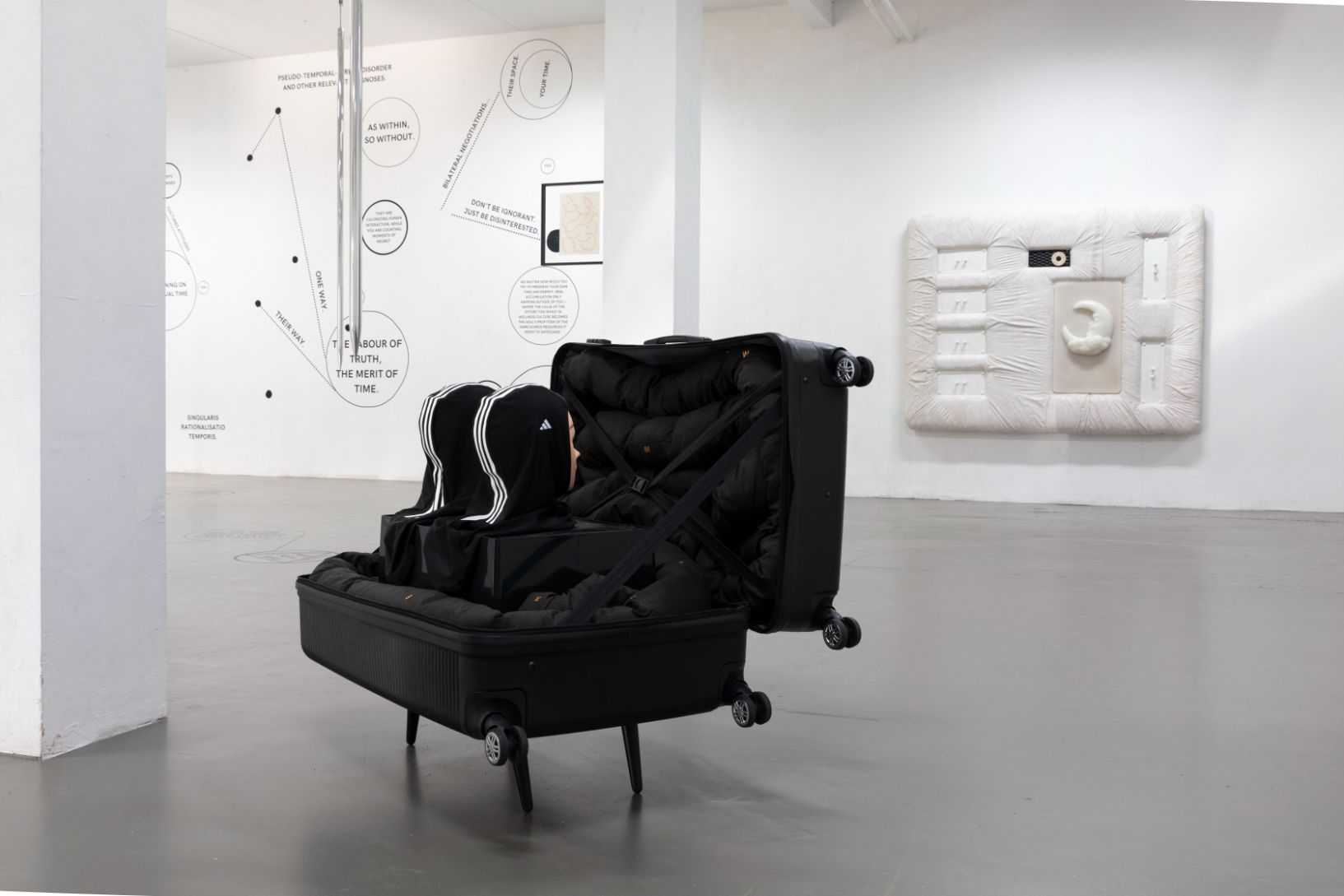
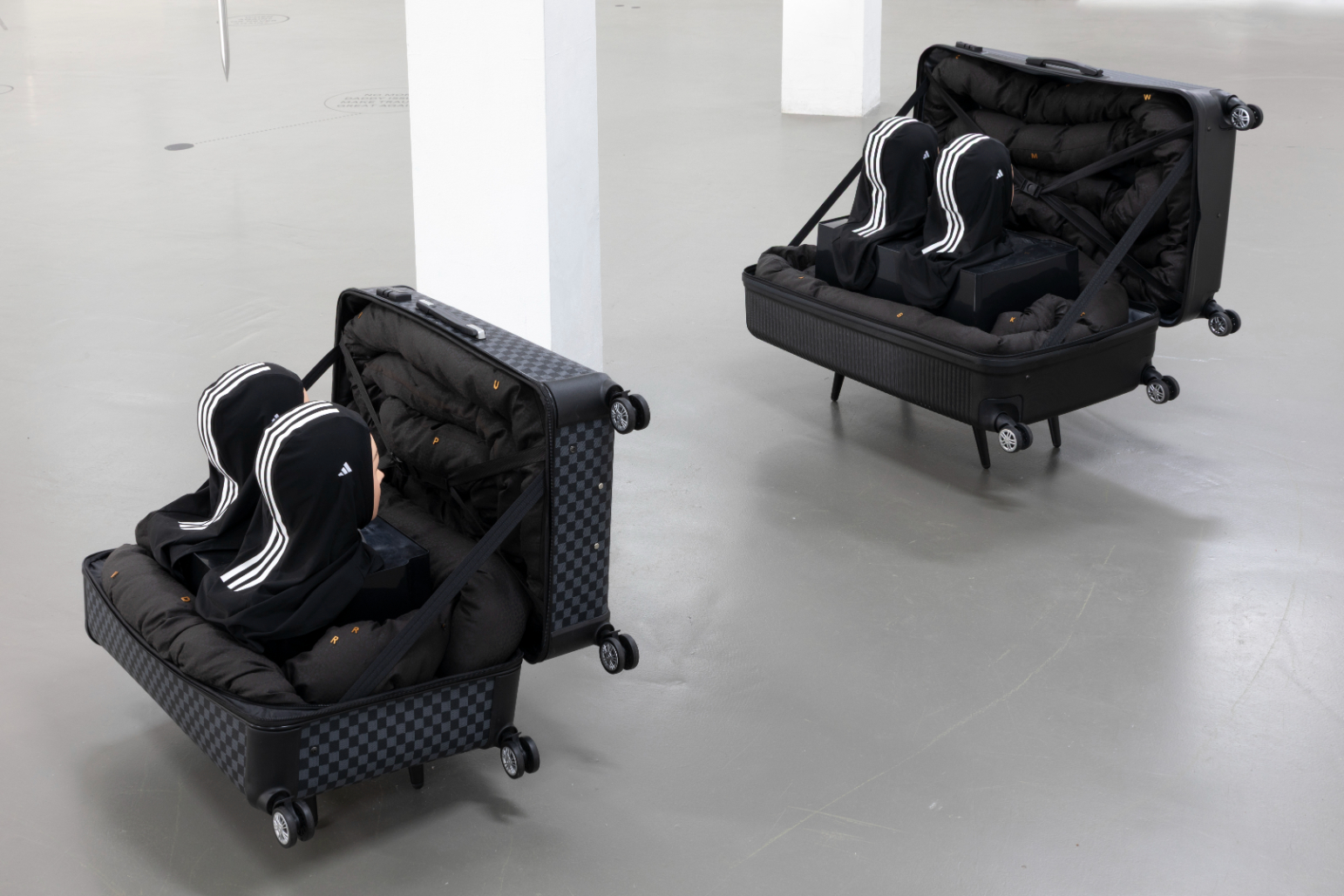
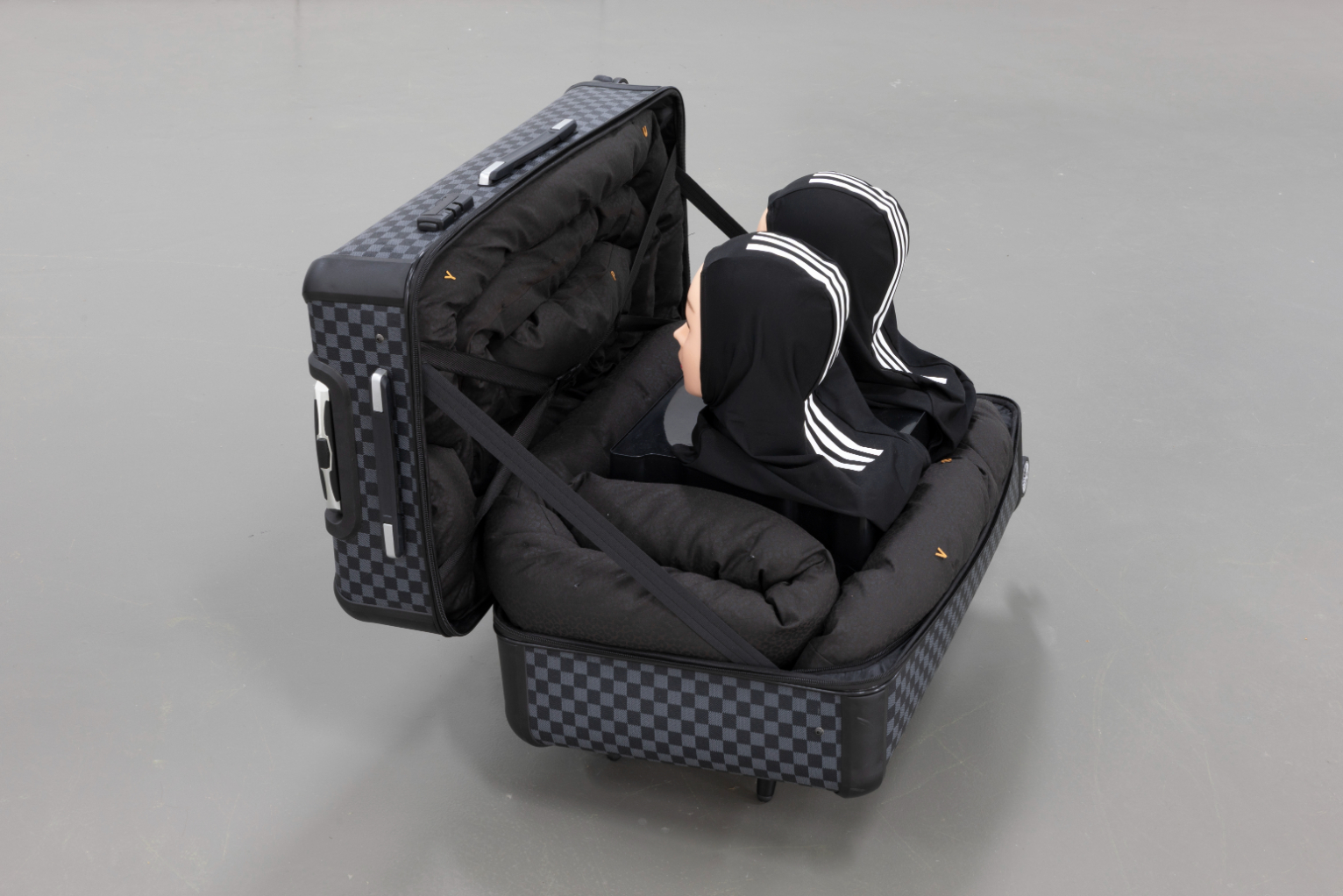
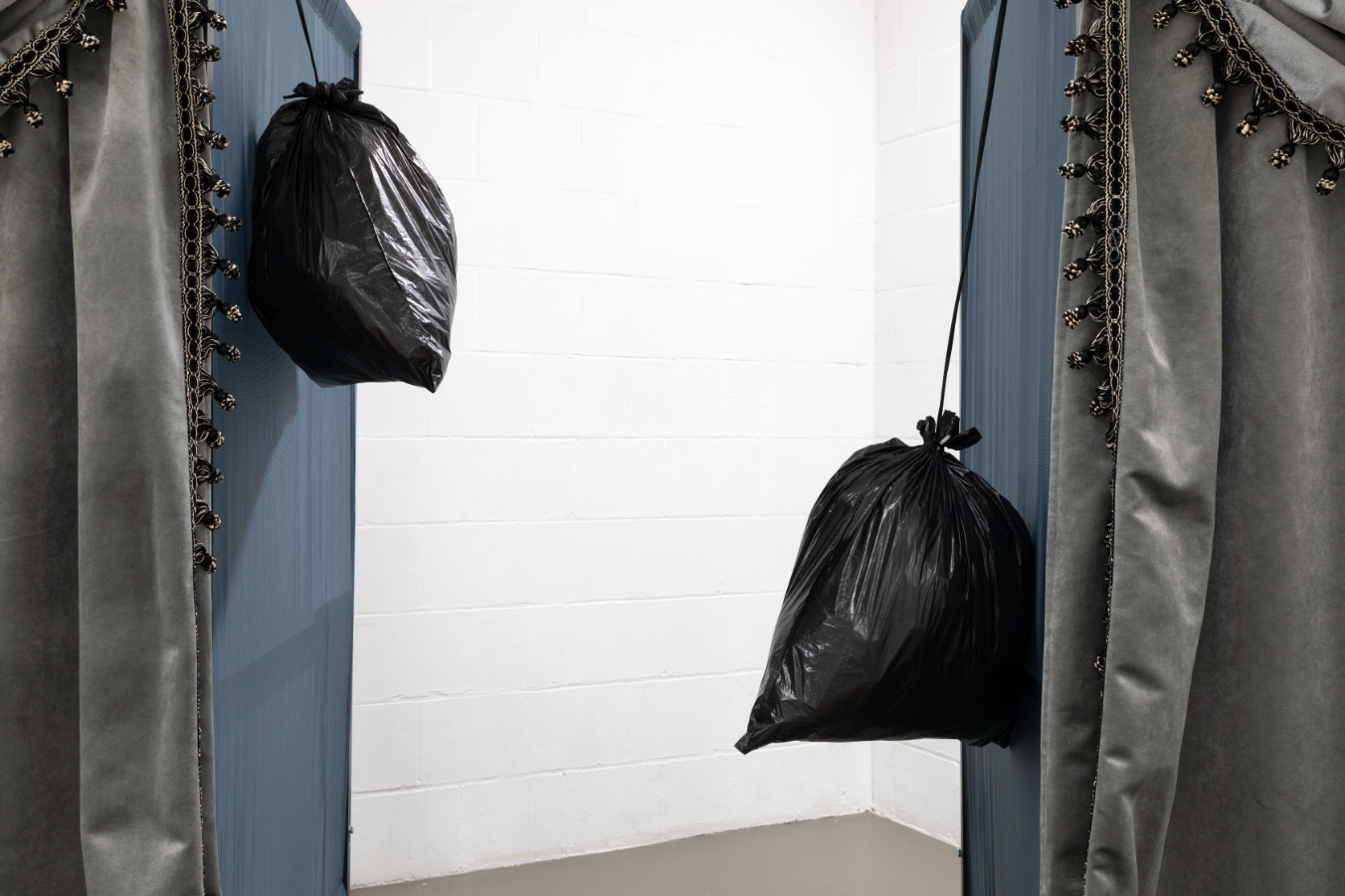
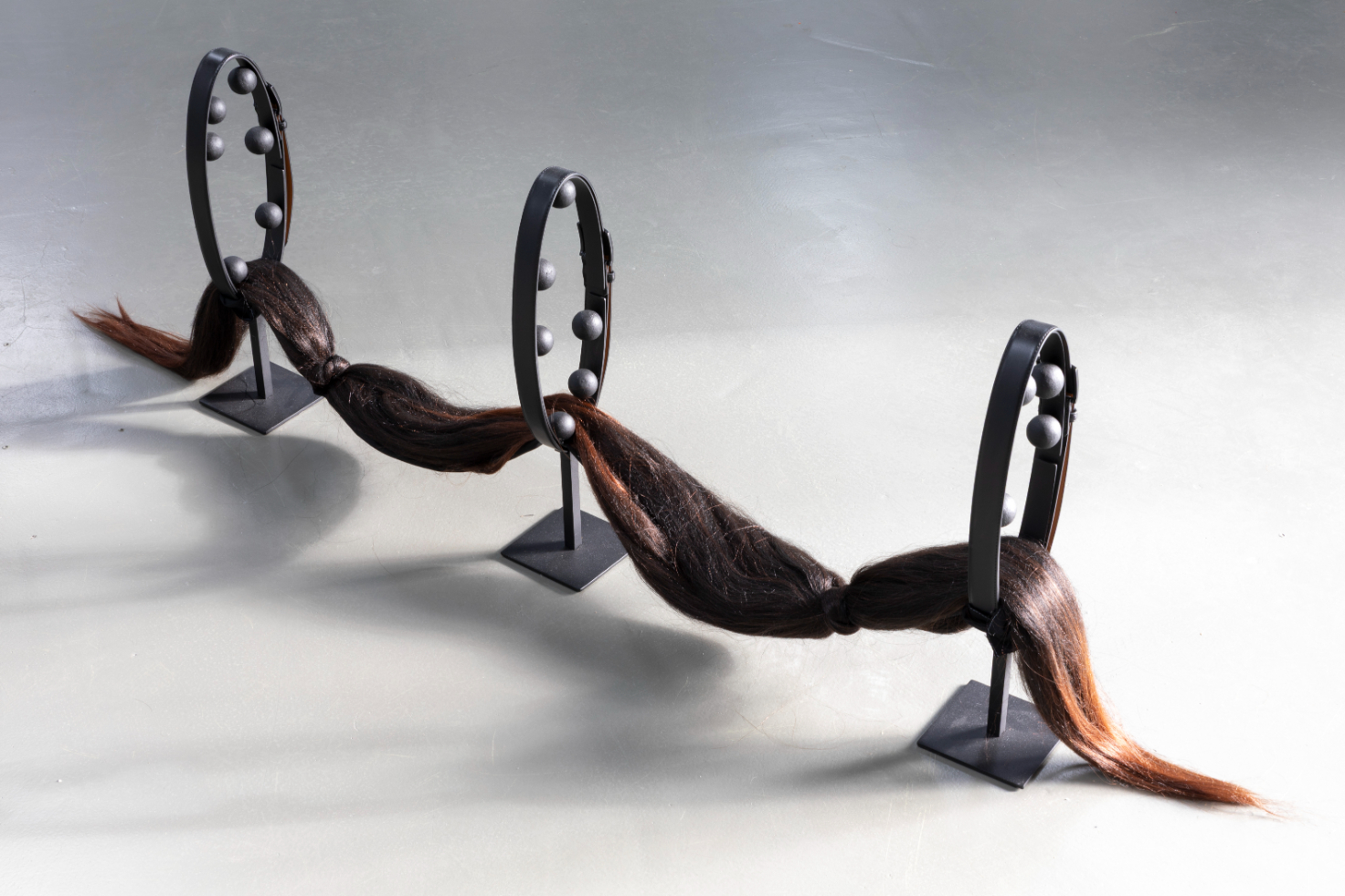
Yeşim Akdeniz's new works are a set of sculptural assemblages that include two voting booths adorned with theatrical curtains and ornate embellishments, alongside suitcases filled with sportswear styled mannequin busts that reference contemporary design and the construction of national and religious identity. These pieces explore how fluid identities are created in an increasingly globalized world defined by institutional processes of migration, integration, and rapid technological change, emphasizing how our sense of self is shaped through coded symbols. Her sculptures reference the way in which design conducts physical movement, an element that remains in her work from past research on modernist furniture and mechanical labour. The juxtaposition of light and heavy textiles relates to access, privacy, and functionality in a critique of the performativity of contemporary democracy concurrent to rising tides of fascism. The objects invite us to reflect on the way that societal institutions and personal identity converge. Through their layered symbolism, these works reference the individual and the collective political body to speak on the intersection of class, economy, and identity, within the frenetic pace of institutional bureaucratic demands.
The exhibition reflects on the constant necessity to produce in a society that does not leave space to rest or room to breathe. It approaches topics of care, labour, and queer and migrant identities through a feminist lens in spatial installations. It will be accompanied by a public programme that expands on the themes through the perspectives of various actors on Amsterdam’s cultural scene.
With the generous support from: AFK, Mondriaan Funds, Brouwerij ‘t IJ
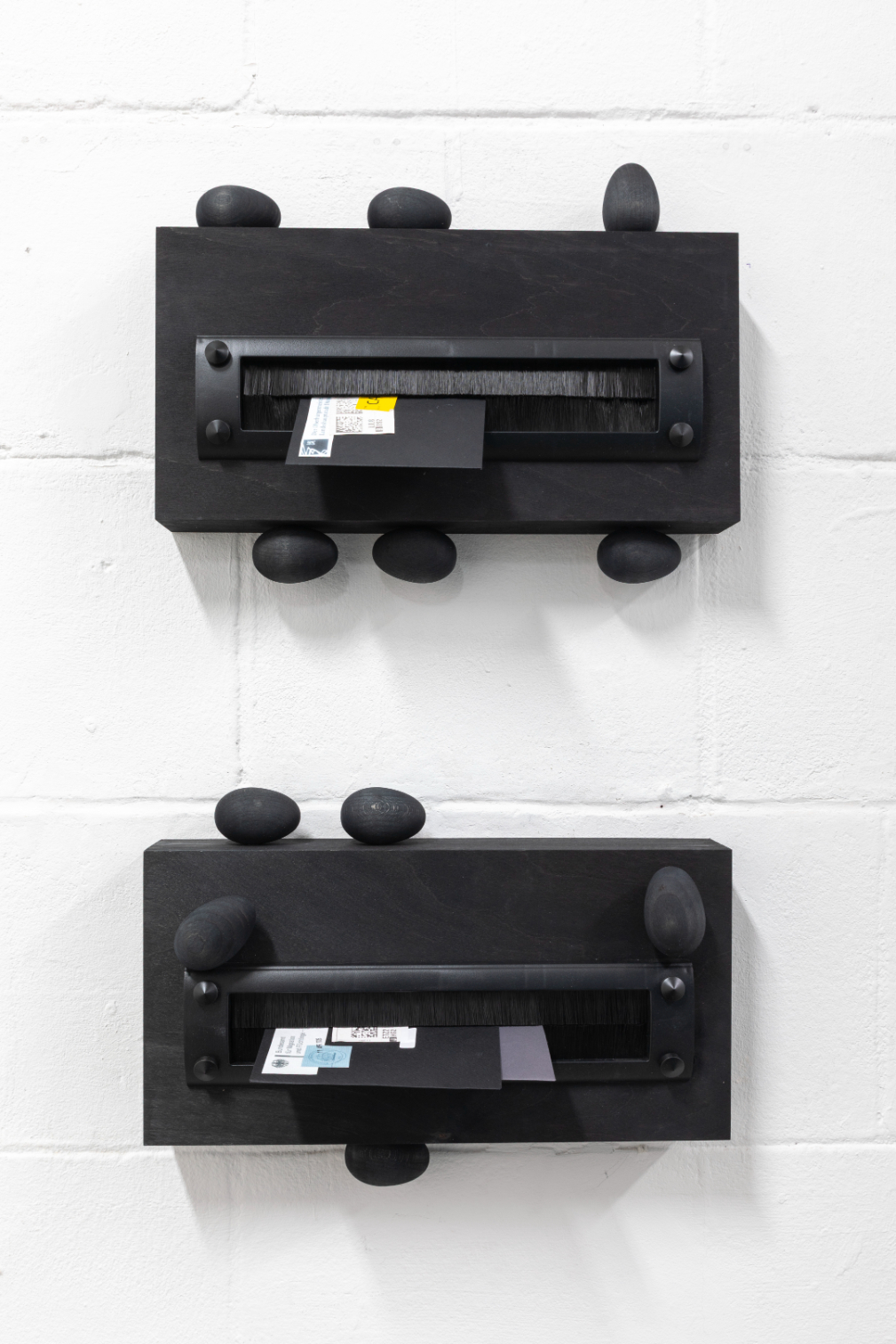
Exhibition view, PAKT Foundation Amsterdam, 2025
Exhibition view, PAKT Foundation Amsterdam, 2025
Exhibition view, PAKT Foundation Amsterdam, 2025
Exhibition view, PAKT Foundation Amsterdam, 2025
Exhibition view, PAKT Foundation Amsterdam, 2025
Exhibition view, PAKT Foundation Amsterdam, 2025
Exhibition view, PAKT Foundation Amsterdam, 2025
Exhibition view, PAKT Foundation Amsterdam, 2025
Exhibition view, PAKT Foundation Amsterdam, 2025
Exhibition view, PAKT Foundation Amsterdam, 2025
Exhibition view, PAKT Foundation Amsterdam, 2025
Exhibition view, PAKT Foundation Amsterdam, 2025
Exhibition view, PAKT Foundation Amsterdam, 2025
The Hard Edge of the Labour of Time
PAKT Foundation, Amsterdam, 2025
Andrea Knezović & Yeşim Akdeniz
Curated by Àngels Miralda
I can never remember my passport number - no matter how many times in a row I need to write it down. Reaching for my backpack, zzzzzip* opendoen. There it is, flip page, find number, type it in.
When people ask me why I live in the Netherlands I always tell them it’s because I love Dutch bureaucracy. Lips turn up in a sly smile as I fill out paper documents from my home country. Done, stamp, put it in the envelope, ouch!
Finger to mouth, salty brine. Papercut straight across the thumb. White paper, black text, red stain. Cutting into the imprints of my identity - that pink identity in blue ink pressed against the beige paper of police files stored away in another continent. Straight across, cutting through who I really am.
Photograph. Eyes closed. Try again.
This exhibition is about time, the impossibility of rest in an age in which tasks pile up endlessly. It’s about maintenance - time means you need to attend to things on a monthly/weekly/daily basis. How is this doubled, tripled, when you have responsibilities towards other living beings or when you’re waiting for a visa that is always imminently expired, for a rent contract that’s always about to end. Where will we be in a years’ time, two? Security is about eliminating temporalities, finding permanence in a world based on obsoletion and subscription models that thrive on insecurity.
It’s always about stepping on a fine line — a hopscotch of possibilities. In her newly commissioned kinetic installation, composed of seven large-scale sculptural elements functioning as chronometers, Andrea Knezović stages a symbolic play of temporal realities unfolding across multiple moments in time. The work moves through different modes and traces of temporality and their chronopolitics — from consensual (or “true”) time to imagined, errant, and recovered time; from the deeply personal to the collective. Surrounding this slow machinery of time, her signature spatial diagrams sharpen the installation’s inquiry into how temporal experience conditions our relation to self, community, space, and contemporary politics. These diagrams act as satirical reflections on interpersonal neurosis, emotional forms of labour, and the affective economies of cognitive capitalism, exposing its wider socio-political frameworks. A series of drawing scores accompany the installation, using language and its performative tension to articulate shifting perceptions of time, space, measurement, and the emotional nonlinearity of temporal experience.
Yeşim Akdeniz's new works are a set of sculptural assemblages that include two voting booths adorned with theatrical curtains and ornate embellishments, alongside suitcases filled with sportswear styled mannequin busts that reference contemporary design and the construction of national and religious identity. These pieces explore how fluid identities are created in an increasingly globalized world defined by institutional processes of migration, integration, and rapid technological change, emphasizing how our sense of self is shaped through coded symbols. Her sculptures reference the way in which design conducts physical movement, an element that remains in her work from past research on modernist furniture and mechanical labour. The juxtaposition of light and heavy textiles relates to access, privacy, and functionality in a critique of the performativity of contemporary democracy concurrent to rising tides of fascism. The objects invite us to reflect on the way that societal institutions and personal identity converge. Through their layered symbolism, these works reference the individual and the collective political body to speak on the intersection of class, economy, and identity, within the frenetic pace of institutional bureaucratic demands.
The exhibition reflects on the constant necessity to produce in a society that does not leave space to rest or room to breathe. It approaches topics of care, labour, and queer and migrant identities through a feminist lens in spatial installations. It will be accompanied by a public programme that expands on the themes through the perspectives of various actors on Amsterdam’s cultural scene.
With the generous support from: AFK, Mondriaan Funds, Brouwerij ‘t IJ